
Hazardous area
Precise risk assessment

Based on quantitative evaluations that reflect the actual situation,Optimize the scope of the hazardous area.

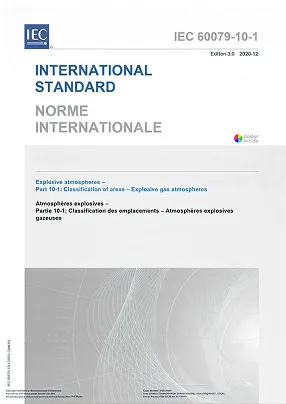
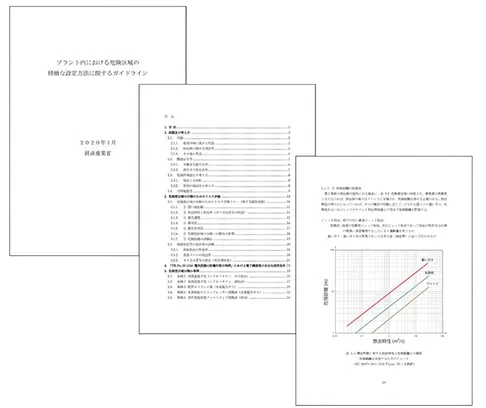
"Precise Risk Assessment of Hazardous Areas" is a method for optimizing hazardous areas (explosion-proof areas) in hazardous materials handling facilities through quantitative risk assessment in accordance with the "Guidelines on Precise Methods for Setting Hazardous Areas in Plants" (hereinafter referred to as the "Explosion-Proof Guidelines") issued by the Ministry of Economy, Trade and Industry and the international standard IEC 60079-10-1 Edition 3.0 (hereinafter referred to as "IEC Ed3.0").

Unlike conventional, uniform settings, by taking into account more specific leakage conditions, gas release characteristics, ventilation conditions, and material properties, it is possible to accurately assess risks and more rationally distinguish between hazardous and non-hazardous areas.

In many cases, this leads to a reduction in hazardous areas (an expansion of non-hazardous areas), thus reducing costs and maintenance burdens while maintaining safety, and contributing to the realization of smart security (digital transformation).

IEC Ed3.0
IEC Ed3.0
防爆ガイドライン
Explosion-proof guidelines

Smart SecurityThe first step to achieving this

"Precise risk assessment" is the gateway to smart security, achieving a high level of both safety and rationality.

Conventional methods often fail to accurately reflect the physical properties of materials and operating conditions, resulting in the need for widespread explosion-proof measures. By adopting evaluation methods that incorporate the latest knowledge, it is possible to more accurately identify the location of risks.

A thorough review of the current zone designations and the establishment of a well-defined security system should help alleviate the burden on on-site personnel while maintaining confidence in safety.

Problems that can be solved

We can solve these problems!

  • When I consulted with the fire department, they suggested an evaluation based on the latest guidelines.
    Alternatively, they are having trouble because they are being asked to have an evaluation conducted by a third-party organization.

  • We want to introduce non-explosion-proof equipment for digital transformation. However, the risk assessment required for this is highly specialized.
    We are unsure about proceeding with this in-house, so we would like to receive support from experts.

  • I recognize the need for smart security, but I don't know where to start.
    First, please tell me what approach we should take, taking into account our company's situation.

Merits

Benefits of risk assessment

  • Merit 01

    Optimization of hazardous areas and cost reduction

    By rationally assessing risks and minimizing the extent of hazardous areas, it becomes possible to switch from expensive explosion-proof equipment to general-purpose non-explosion-proof equipment. This eliminates the need for rigorous explosion-proof construction, significantly reducing capital investment and maintenance costs.
    Furthermore, it becomes easier to utilize advanced technologies such as Wi-Fi, robots, and drones, which can strongly promote smart security and digital transformation.

  • Merit 02

    Application to Grade 1 emission sources

    While explosion-proof guidelines and IEC Ed3.0 do not specify concrete calculation methods for "Class 1 emission sources" such as tank vents and open liquid surfaces, examining risk assessment methods based on actual physical phenomena makes it possible to rationally define hazardous areas that were previously widely established.
    (We will present our criteria for evaluating Class 1 emission sources.)

  • Merit 03

    屋内施設での非危険区域の確保

    In indoor facilities handling hazardous materials, it is possible to make the entire area a non-hazardous zone by reviewing the ventilation capacity of the ventilation system, installing backup units, and installing local exhaust ventilation.
    (We also conduct indoor evaluations based on IEC Ed3.0.)

  • Merit 04

    Application to facilities handling small quantities of hazardous materials

    Even in facilities handling small quantities of hazardous materials, where the amount of hazardous materials handled is limited compared to hazardous materials manufacturing plants and general handling facilities, risk assessment can significantly reduce hazardous areas and even make the entire facility a non-hazardous area.

  • Merit 05

    保安レベルの維持・向上

    It is possible to implement safety measures that are more in line with actual conditions while maintaining the safety level required by law. Comprehensive identification of release sources and risk assessment make hazardous areas visible, and it is expected that safety awareness will be improved through safety education and other means.

Examples of developments after risk assessment

Identifying non-hazardous areas through risk assessment accelerates digital transformation and operational efficiency, which are core elements of smart security, and directly contributes to addressing on-site personnel shortages and reforming work styles.
Below are some specific examples of its implementation.

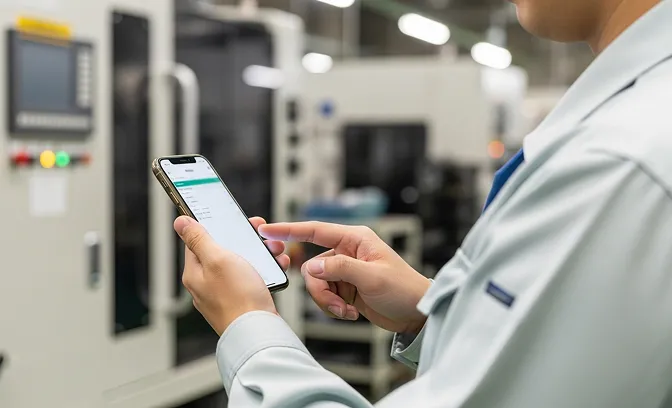
  • スマートフォンで現場作業を行う様子
    01

    smartphones and other
    Expanding the scope of use for portable non-explosion-proof equipment

    Smartphones and tablets enable on-site information viewing, immediate information sharing and reporting, and the digitization of work records, leading to increased efficiency and reduced workload in on-site operations. They also contribute to ensuring worker safety through the use of vital signs sensors and other devices.

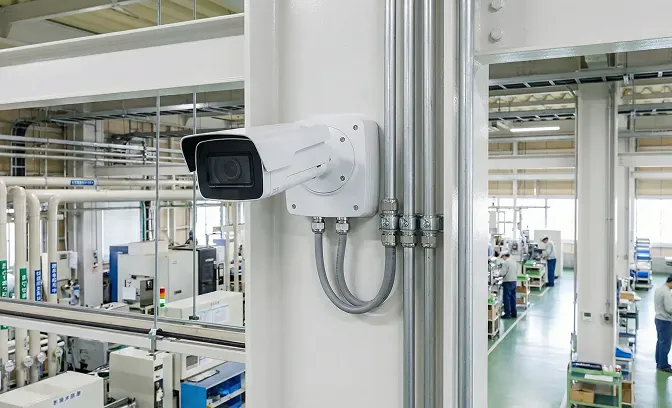
  • 工場内に設置された監視カメラ
    02

    Expanding the range of sensor and camera installation

    Continuous measurement using sensors and cameras enables automation of operations and digitization of records. Analysis of collected data allows for early detection of anomalies, preventing malfunctions and accidents. Furthermore, by adding intrusion detection functionality, accidental entry into hazardous areas can be prevented, enhancing safety.

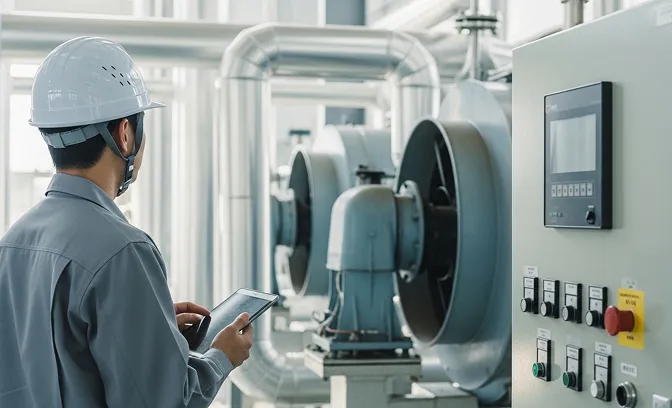
  • 制御盤を確認する作業者
    03

    Realizing the introduction of fixed equipment that is difficult to construct with explosion-proof structures.

    By designating the entire room or the area surrounding the equipment as a non-hazardous zone, it becomes possible to install fixed equipment and devices that are difficult to construct with explosion-proof structures. We will consider and present the conditions for securing a non-hazardous zone (such as ventilation conditions and permissible leakage rates).

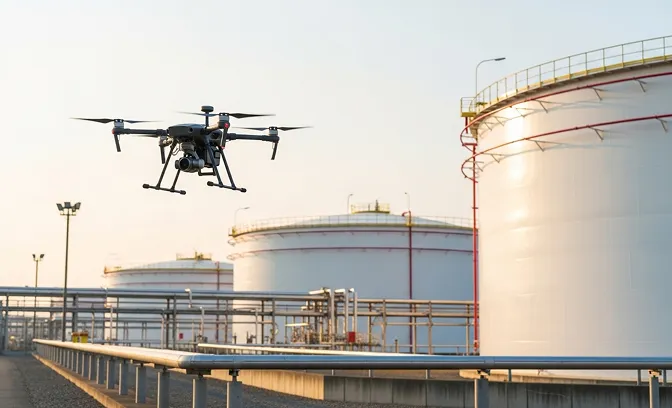
  • タンク上空を飛行するドローン
    04

    Promoting the use of drones

    At hazardous materials facilities, there is a growing need for drone-based high-altitude inspections and anomaly diagnosis using image analysis as alternatives to scaffolding. Prior to flight, it is essential to create a flight plan and implement safety management that clearly distinguishes between hazardous and non-hazardous areas.

  • 電卓と書類を持つ作業者
    05

    Construction cost reduction

    Expanding the non-hazardous area allows for the adoption of less expensive, non-explosion-proof equipment during equipment replacement. This eliminates the need for special explosion-proof specifications, contributing to significant reductions in construction costs in terms of both equipment procurement and installation costs.

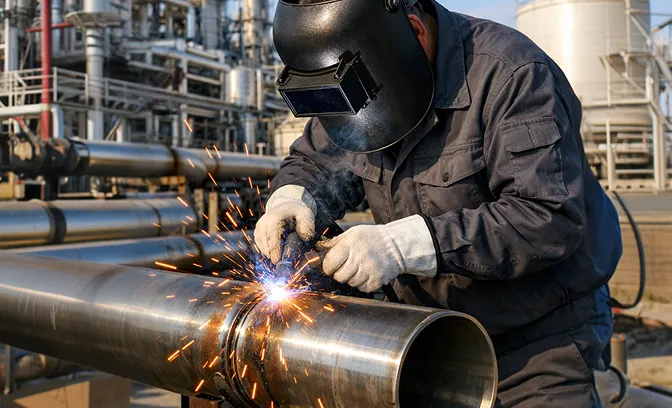
  • 溶接作業を行う作業者
    06

    Expansion of areas where open flames can be used and
    Standardization of construction work

    Expanding the non-hazardous areas will make it possible to carry out construction work involving the use of fire as part of routine construction, reducing the burden of scheduled maintenance work and allowing for a more leveling of construction operations.

Meeting customer needs
System Building

Traditionally, hazard zones were primarily defined by setting a uniform hazard distance from the emission source. However, to establish convincing hazard zones while balancing safety and economic rationality, a sophisticated assessment based on the latest explosion-proof guidelines and IEC Ed3.0 is essential.

Our company conducts advanced engineering studies using expertise in chemical engineering, thermodynamics, and fluid dynamics to address complex conditions such as the evaluation of Class 1 emission sources not specified in explosion-proof guidelines or IEC Ed3.0, and evaporation calculations that take thermal effects into account.

By comprehensively identifying all emission sources and performing individual risk calculations, we can accurately visualize the risks and establish evidence-based hazard zones.

To provide this specialized process quickly, we have promptly established an efficient implementation system. We strongly support the optimization of equipment investment while ensuring reliable explosion-proof safety.

Furthermore, IECEd3.0 is a widely adopted standard overseas. To meet the needs of evaluations for overseas locations, we can provide reports and evaluation results entirely in English.

  • Guidelines and IEC Ed3.0
    Unspecified calculations are required.

    Based on our past evaluation experience, we have accumulated know-how.
    Efficient considerationWe will build a system that makes this possible.

  • It was done by hand and took a long time.
    It is expected that this will be necessary.

    By utilizing our proprietary program,
    Significant time reductionWe will provide you with the evaluation results in a state where this has been achieved.

  • For overseas bases
    A risk assessment needs to be considered.

    Report and Review ResultsIn EnglishWe can also provide a presentation.

Main Achievements

Here are some of the industries in which our company has provided consulting services to date.

We have worked closely with customers in a wide variety of industries that handle hazardous materials, and have turned their requests into reality.
Based on our extensive experience, we strongly support the advancement of smart security and digital transformation in hazardous materials facilities.

  • Petroleum product plant
  • Petrochemical plant
  • oil depot
  • Chemical manufacturing plants
  • Plastic molding factory
  • Semiconductor-related factories
  • Pharmaceutical-related factories
  • Painting factory
  • research institute
  • GX-related facilities (hydrogen, etc.)
  • National oil reserve base
    (Fukui Oil Storage Co., Ltd.)
  • Paint, ink, and packaging material manufacturing plants; printing plants
  • Airport refueling facility (Kansai International Airport Aircraft Refueling Facility)
  • Cleaning process using organic solvents

others